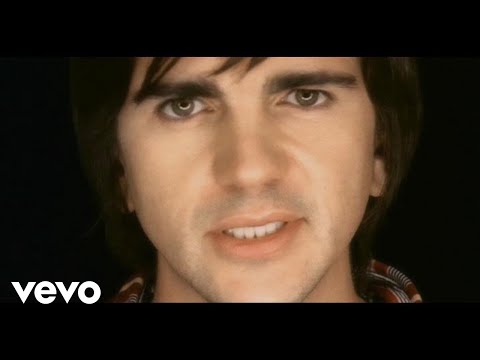
Song guide
La Camisa Negra
Juanes
La Camisa Negra by Juanes, line by line: what the lyrics mean, 25 expressions explained and 346 words translated with their grammar. Learn Spanish from the song, free.
Lyrics with English translation, line by line
Each line as sung, what it means, and — where it needs one — why it's said that way.
-
Uno por pobre y feo, home, pero antojao', ¡ah hijueputa...!
One for being poor and ugly, man, but I'm craving it — oh, son of a bitch...!
The opening line is a spoken aside in Colombian slang. «Home» is a Colombianized version of the English 'homie/man.' «Hijueputa» is a Colombian Spanish expletive (contraction of «hijo de puta»), used here as an exclamation of desire or excitement rather than anger. «Antojao'» (antojado) means craving something intensely — the speaker is saying he's poor and ugly but still full of desire.
-
Tengo la camisa negra, hoy mi amor está de luto
I'm wearing a black shirt; today my love is in mourning
«La camisa negra» (The Black Shirt) is a 2005 hit by Colombian singer Juanes (Juan Esteban Aristizábal Vásquez). Black clothing is a universal symbol of mourning, and the song plays on this symbolism throughout — the black shirt mirrors the singer's blackened soul and grief.
-
Hoy tengo en el alma una pena y es por culpa de tu embrujo
Today my soul carries a sorrow, and it's all because of your spell
-
Hoy sé que tú ya no me quieres y eso es lo que más me hiere
Today I know you no longer love me, and that's what hurts me the most
-
Que tengo la camisa negra y una pena que me duele
That I'm wearing a black shirt and have a sorrow that pains me
-
Mal parece que solo me quedé
It seems like I ended up all alone
-
Y fue pura todita tu mentira
And your whole story was nothing but a lie
«Todita» is a diminutive of «toda» (all/whole). In Colombian and Latin American Spanish, adding the diminutive suffix -ita/-ito to words like «todo» creates an emphatic, slightly ironic or emotional tone — 'every last bit of it was a lie.'
-
Qué maldita mala suerte la mía
What a damn stroke of bad luck I have
-
Que aquel día te encontré
That day I found you
-
Por beber del veneno malevo de tu amor
For drinking the malevolent poison of your love
«Malevo» is a colloquial/regional shortening of «malévolo» (malevolent). It is more common in River Plate Spanish (Argentina/Uruguay) and Colombian slang than in standard Spanish, giving the lyric a street-level, informal feel.
-
Yo quedé moribundo y lleno de dolor
I was left on the brink of death and filled with pain
-
Respiré de ese humo amargo de tu adiós
I breathed in the bitter smoke of your goodbye
-
Y desde que tú te fuiste yo solo tengo
And ever since you left, all I have is
-
Tengo la camisa negra porque negra tengo el alma
I'm wearing a black shirt because my soul is black
-
Yo por ti perdí la calma y casi pierdo hasta mi cama
Because of you I lost my cool and almost lost my bed too
-
Cama-cama, come on, baby, te digo con disimulo
Come to bed, come on, baby, I say it casually
«Cama-cama» is a playful double entendre. On the surface it is just the word for 'bed' repeated, but in context the singer is using it as a flirtatious invitation. The English phrase «come on, baby» is inserted mid-lyric, a common feature of Latin pop that blends Spanish and English for stylistic effect.
-
Que tengo la camisa negra y debajo tengo el difunto
I'm wearing a black shirt and underneath lies the deceased
«El difunto» literally means 'the deceased/dead man.' This is a darkly comic sexual double entendre: the singer claims to have something 'dead' under his black shirt, playing on the mourning imagery of the song while making a crude joke about his anatomy.
-
¡Pa' enterrártelo cuando quieras, mamita! ¡Juya!
So you can bury it whenever you want, mama! Yeah!
«Juya» (also spelled «juepucha» or «juya») is a Colombian euphemistic exclamation, a softened substitute for a stronger expletive, used to express excitement or emphasis. «Mamita» is an affectionate Colombian/Latin American term of address for a woman, roughly equivalent to 'mama' or 'sweetie.'
-
Así como lo oye, mija
Just like you heard it, sweetie
«Mija» is a contraction of «mi hija» (my daughter), used throughout Latin America as a warm, informal term of address for any younger woman or close female, not necessarily one's actual daughter.
-
Tengo la camisa negra, ya tu amor no me interesa
I'm wearing a black shirt; your love no longer interests me
-
Lo que ayer me supo a gloria, hoy me sabe a pura
What tasted like heaven to me yesterday tastes like pure filth to me today
The line ends with «pura» and is deliberately left incomplete — the implied word is a vulgar Spanish term (likely «mierda» or similar). This kind of censored or implied vulgarity is a common device in Latin pop to suggest profanity while maintaining radio playability.
-
Miércoles por la tarde y tú que no llegas, ni siquiera muestras señas
It's Wednesday afternoon and you still haven't shown up — not even a sign of you
«Miércoles» (Wednesday) is used in Colombian and broader Latin American Spanish as a euphemistic substitute for a vulgar expletive («mierda»). The two words sound similar enough that «miércoles» functions as a polite stand-in, much like English speakers say 'shoot' instead of a stronger word.
-
Y yo con la camisa negra y tus maletas en la puerta
And there I was in my black shirt with your suitcases by the door
-
Mal parece que solo me quedé
It seems like I ended up all alone
-
Y fue pura todita tu mentira
And your whole story was nothing but a lie
-
Que maldita mala suerte la mía
What terrible luck I have
-
Que aquel día te encontré
That day I found you
-
Por beber del veneno malevo de tu amor
For drinking the malevolent poison of your love
-
Yo quedé moribundo y lleno de dolor
I was left on the brink of death and filled with pain
-
Respiré de ese humo amargo de tu adiós
I breathed in the bitter smoke of your goodbye
-
Y desde que tú te fuiste yo solo tengo
And ever since you left, all I have is
-
Tengo la camisa negra
I'm wearing a black shirt
-
Porque negra tengo el alma
Because my soul is black
-
Yo por ti perdí la calma
Because of you I lost my cool
-
Y casi pierdo hasta mi cama
And I almost lost even my bed
-
Cama-cama, come on, baby
Come to bed, come on, baby
-
Te digo con disimulo
I'll say it in a roundabout way
-
Que tengo la camisa negra
I'm wearing a black shirt
-
Y debajo tengo el difunto
And underneath lies the deceased
-
Tengo la camisa negra
I'm wearing a black shirt
-
Porque negra tengo el alma
Because my soul is black
-
Yo por ti perdí la calma
Because of you I lost my cool
-
Y casi pierdo hasta mi cama
And I almost lost even my bed
-
Cama-cama, come on, baby
Come to bed, come on, baby
-
Te digo con disimulo
I'll say it in a roundabout way
-
Que tengo la camisa negra
I'm wearing a black shirt
-
Y debajo tengo el difunto
And underneath lies the deceased
Expressions and idioms in “La Camisa Negra”
The lines that don't mean what the dictionary says.
- está de luto is in mourning
- The fixed phrase estar de luto means 'to be in mourning.' The preposition de here signals a state or condition, a pattern seen in many Spanish expressions: estar de vacaciones (to be on holiday), estar de buen humor (to be in a good mood).
- Tengo la camisa negra I'm wearing a black shirt
- Spanish uses tener (to have) rather than a verb meaning 'to wear' when describing clothing one currently has on. The pattern tener + article + garment is a common colloquial way to say you are wearing something.
- por culpa de because of / due to the fault of
- Por culpa de is a fixed prepositional phrase meaning 'because of' with a strong sense of blame. It is stronger than simply por (because of) and implies that someone or something is at fault.
- ya no me quieres you no longer love me
- Ya no + verb is the standard Spanish construction for 'no longer.' Ya alone can mean 'already,' but ya no reverses the meaning to signal something has stopped. Querer in this context means 'to love' rather than 'to want,' which is its other common meaning.
- lo que más me hiere what hurts me the most
- Lo que is a neuter relative pronoun meaning 'what' or 'that which.' It is used when there is no specific noun antecedent. Más + verb creates a superlative of degree: 'the most.'
- una pena que me duele a sorrow that hurts me
- Doler works like gustar: the thing that hurts is the grammatical subject, and the person who feels the pain is expressed with an indirect object pronoun (me, te, le). So 'me duele la pena' literally means 'the sorrow hurts to me.'
- me quedé I was left / I ended up
- Quedarse (reflexive form of quedar) means 'to stay' or 'to end up (in a state).' Plain quedar means 'to remain/be left over' or 'to arrange to meet.' Adding the reflexive pronoun me shifts the meaning toward a personal, experiential result: 'I ended up alone.'
- la mía mine
- The stressed possessive pronoun mío/mía follows the noun or stands alone with a definite article. Here la mía refers back to la suerte (luck), meaning 'my luck.' This is different from the unstressed mi (my) used before a noun.
- maldita mala suerte damned bad luck
- Stacking maldita (damned/cursed) before mala suerte (bad luck) is a common intensifying pattern in colloquial Spanish. Maldito/a functions as an expletive adjective to add emotional force, similar to English 'damn' before a noun.
- por beber del veneno for drinking the poison
- Por + infinitive expresses cause or reason: 'because of drinking,' 'for having drunk.' This is a key pattern for explaining why something happened. Del is the mandatory contraction of de + el.
- lleno de dolor filled with pain
- Lleno de + noun means 'full of' or 'filled with.' The preposition de is required here where English uses 'with.' This pattern applies broadly: lleno de alegría (full of joy), lleno de dudas (full of doubts).
- quedé moribundo I was left dying / I ended up on the brink of death
- Quedar + adjective (without a reflexive pronoun) describes the resulting state after an event: 'I ended up [adjective].' This construction is very common: quedé sorprendido (I was left surprised), quedé solo (I ended up alone).
- desde que tú te fuiste ever since you left
- Desde que + verb introduces a time clause meaning 'since' or 'ever since.' Te fuiste is the preterite of irse (to leave/go away), the reflexive form of ir. Irse emphasizes departure, whereas plain ir simply means 'to go.'
- te fuiste you left
- Irse (reflexive) means 'to leave' or 'to go away,' emphasizing the act of departing from a place or person. Plain ir means 'to go' without that sense of leaving someone behind. The reflexive pronoun te marks the 2nd person singular.
- negra tengo el alma my soul is black
- This is a poetic inversion (hyperbaton) for emphasis: the adjective negra is fronted before the verb. Standard word order would be 'tengo el alma negra.' Fronting the adjective gives it dramatic weight. Note that el alma is feminine but takes the masculine article el to avoid the awkward sound of 'la alma.'
- casi pierdo hasta mi cama I almost lost even my bed
- Casi + present/preterite verb means 'almost' — the speaker narrowly avoided losing something. Hasta here is used as an intensifying adverb meaning 'even,' not its more common meaning of 'until/up to.' This emphatic hasta is common in colloquial speech.
- perdí la calma I lost my cool / I lost my composure
- Perder la calma is a fixed idiomatic expression meaning 'to lose one's composure' or 'to lose one's cool.' Spanish uses the definite article (la calma) where English uses a possessive ('my cool').
- te digo con disimulo I tell you casually / I say it trying to sound nonchalant
- Con disimulo is a prepositional phrase meaning 'with concealment' or 'trying to hide one's true intentions.' The pattern con + noun of manner is used like an adverb: con cuidado (carefully), con disimulo (casually/sneakily).
- pa' enterrártelo cuando quieras so you can bury it in you whenever you want
- Pa' is a colloquial elision of para, meaning 'so that' or 'for.' Enterrártelo combines the infinitive enterrar (to bury) with two attached pronouns: te (to/in you) and lo (it). When quieras uses the present subjunctive because cuando + subjunctive expresses an indefinite future time ('whenever you want').
- así como lo oye just like you heard it / exactly as you hear it
- Así como is a fixed phrase meaning 'just as' or 'exactly as.' It is used to confirm or emphasize that something is exactly as stated. Lo oye uses the 3rd person as a polite or rhetorical address, common in Colombian Spanish.
- me sabe a pura tastes like pure [filth] to me
- Saber a + noun/adjective means 'to taste like.' Here pura is left deliberately incomplete — the word that follows is censored or implied (a vulgar word). The construction is the same as saber a gloria above, showing how the same pattern can express opposite extremes.
- me supo a gloria tasted like heaven to me
- Saber a + noun means 'to taste like.' This is a verb + governed preposition construction: saber a gloria (to taste like heaven/bliss), saber a poco (to feel like not enough). The indirect object pronoun me indicates who experiences the taste.
- ni siquiera muestras señas you don't even show a sign
- Ni siquiera is a fixed emphatic negation meaning 'not even.' It intensifies the negation beyond a simple no. Mostrar señas means 'to show signs/signals,' and together the phrase conveys total absence of any indication.
- tú que no llegas and you still haven't shown up
- The construction tú que no + verb is a colloquial emphatic pattern in Spanish, roughly equivalent to 'and you just won't...' or 'and there you are, not...' The que here is not a standard relative pronoun but a colloquial connector adding exasperation.
- tus maletas en la puerta your suitcases by the door
- Putting someone's maletas (suitcases) en la puerta (at/by the door) is a culturally loaded image in Spanish-language song and culture, signifying that the person is being thrown out or has been packed off. The verb is dropped (ellipsis), a common feature of song lyrics.
Vocabulary to learn from “La Camisa Negra”
The words the song uses most.
- tener I have verb ·18
- negro black adjective ·13
- la camisa shirt noun ·10
- perder I lost verb ·6
- la cama bed noun ·6
- el amor love noun ·4
- el alma soul noun ·4
- quedar I stayed / I was left verb ·4
- saber I know verb ·3
- puro pure / nothing but adjective ·3
- la calma calm / composure noun ·3
- decir I say / I tell verb ·3
Verbs in the song, and the form being sung
Present tense for each; the highlighted row is the one you'll hear.
tener I have
| yo | tengo |
|---|---|
| tú | tienes |
| él / ella / usted | tiene |
| nosotros | tenemos |
| vosotros | tenéis |
| ellos / ustedes | tienen |
perder I lost
| yo | pierdo |
|---|---|
| tú | pierdes |
| él / ella / usted | pierde |
| nosotros | perdemos |
| vosotros | perdéis |
| ellos / ustedes | pierden |
quedar I stayed / I was left
| yo | quedo |
|---|---|
| tú | quedas |
| él / ella / usted | queda |
| nosotros | quedamos |
| vosotros | quedáis |
| ellos / ustedes | quedan |
saber I know
| yo | sé |
|---|---|
| tú | sabes |
| él / ella / usted | sabe |
| nosotros | sabemos |
| vosotros | sabéis |
| ellos / ustedes | saben |
decir I say / I tell
| yo | digo |
|---|---|
| tú | dices |
| él / ella / usted | dice |
| nosotros | decimos |
| vosotros | decís |
| ellos / ustedes | dicen |
Grammar you'll meet in this song
- Present38
- Preterite16
- Present subjunctive1